










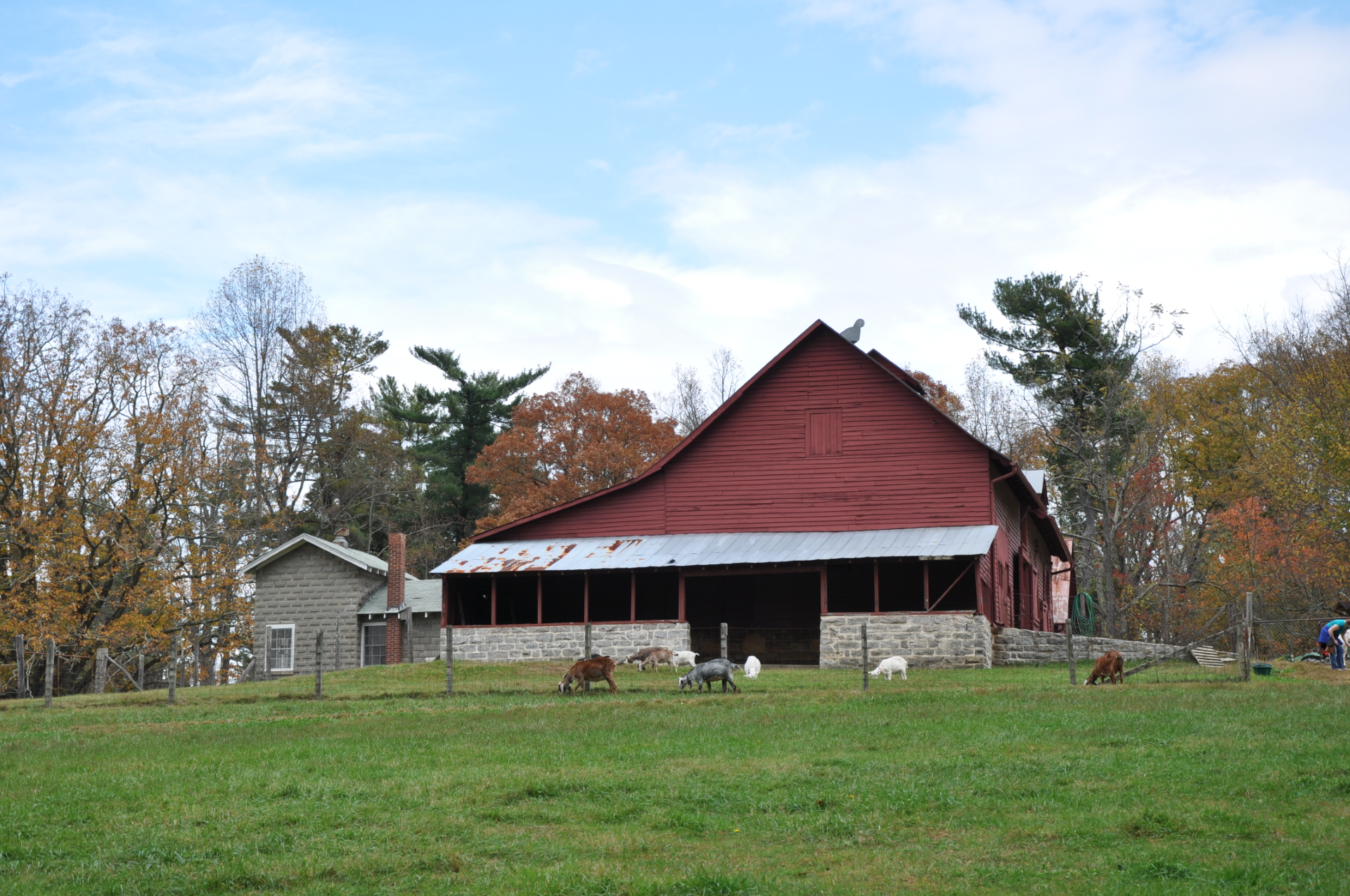
Gary Steiner is proud to be a farmer. He’s even prouder to be a farmer in Henderson County. He grows an array of produce at his farm, Bee-utiful Farm and Garden, which is lush and has sheep, cows, pigs and even a greenhouse, tucked away on farmland in a little neighborhood outside Hendersonville.
When he started farming with his wife, Abigail, more than 10 years ago, it was a part-time thing. The pair mainly farmed out of their garden. Now, they have a community-supported agriculture business where they sell produce boxes to dozens of neighbors, and they sell honey, plant boxes, produce and more at the Hendersonville Farmers Market. He’s also on the county Farmland Preservation Taskforce, one of many throughout the state that wants to keep farmland in the hands of farmers.
While the Blue Ridge Mountains may not be known for agriculture, Henderson County is the largest farming county west of Interstate 77 in North Carolina, measured by the total value of crops and livestock.
[Subscribe for FREE to Carolina Public Press’ Daily, Weekend and Election 2026 newsletters.]
But the county, part of the Asheville metropolitan area, is also seeing increased urbanization pressures. Its estimated population is now about 125,000 spread across its 375-square-mile area. Between 2017 and 2022, Henderson lost more than 8,000 acres of farmland.
And it isn’t just Henderson — North Carolina is losing farmland at rapid speed. It has the second-fastest rate of farmland loss in the nation, behind only Texas. Steiner said he’s worried about what farming in the county will look like in the next 10 years.
“We’re at a crossroads,” he said. “If we stay on this trajectory, we’re going to lose farmland in the next season.”
County government just might have a solution, though. In late July, Henderson County Commissioners unanimously agreed to put a $25 million general obligation bond referendum on the ballot this fall. If passed, money from the bond will go to county farmers when or if they choose to give up the development rights to their land, meaning their land can only be used for agricultural purposes.
After the unanimous vote, the county was required by North Carolina statutes to have a public hearing on the bond last week. The NC Local Government Coalition must now approve the move before county residents can vote on the funds.
Farmland in Henderson County
Henderson County is home to “Apple Country.” Its temperate and mild climate drew farmers to the county, which now grows upwards of 80% of all apples in the state, according to NC Cooperative Extension. It hosts the yearly NC Apple Festival and numerous U-Pick apple farms that bring agricultural tourism to the county.
Terry Kelly is the director of the Henderson County Cooperative Extension, the local arm of NC State University’s statewide agricultural extension program. He said the program helps local farmers and helps youth get involved with agriculture through the 4-H program and Future Farmers of America.
Though Henderson farms don’t typically grow crops like corn, soybeans, or peanuts like their counterparts in eastern and central North Carolina, the county has a diverse agricultural landscape with high-value crops, Kelly said.
About 26% of the county is agriculture and timber, spread across hundreds of farms and tens of thousands of acres. About 20% of the county’s economy is also based in agriculture, according to the 2026 Henderson County Farmland Report. But, in the last decade, the county has been home to residential development in historically rural areas. Especially along the Asheville Highway, the county seat, Hendersonville, has sprouted a number of single-family home subdivisions, according to reporting from the Hendersonville Lightning.
North Carolina has the highest rate of farmland loss to low-density residential development in the nation. This type of development means a small number of houses on large tracts of land, with a considerable amount of distance between the homes. Farmers and local governments across North Carolina have had to come up with creative solutions for the loss of farmland.
Mallory O’Steen, the senior Southeast farmland program manager for the American Farmland Trust, said this type of development is the primary driver for the loss of farmland nationally, particularly in the Southeast.
“North Carolina is obviously seeing significant population growth,” she said. “But, so are other states, and they aren’t losing nearly as much farmland.”
This increased development has made the cost of land considerably high, and has led some farmers to sell their land, Kelly said. While it is beneficial for the county to put money into farmland preservation, he said, he thinks it would be more beneficial if farmers were paid on par with the cost of their crops.
“If our farmers could make a sustainable living and a sustainable profit on their farms, they wouldn’t need to sell their land,” he said, “They can’t put enough money away for retirement on what they make from their farms, then the land becomes their retirement.”
According to the American Farm Bureau, farmers in the U.S. make less than 6 cents out of every dollar spent on food. Maintaining local farmers is a food security issue, Steiner said.
Steiner put his land into a voluntary agricultural district a couple of years ago, which means he made an agreement with the county that his land is for agricultural use only. He joined the program roughly seven years ago and said he had no idea what it was until it was explained to him, but it fell right in line with his goals.
“It gives me a security blanket,” he said.
He is now putting his land into an EVAD, or enhanced voluntary agricultural district, which gives him more of a safety net than just being in a VAD. It’s an irrevocable conservation agreement that lasts 10 years, further protects him from neighborhood noise ordinances and applies deed restrictions to keep land in agricultural use. Some farmers are wary of giving up the rights to their land, not because they want to develop it, but because they might not trust the process, Steiner said.
While the terms of each agreement differ by county, these districts are just one arm of North Carolina’s robust farmland preservation programs, O’Steen said. While 93 of the 100 counties in North Carolina have VADs, only 39 have approved the stricter enhanced program framework, according to the NC Department of Agriculture.
Breaking down the bond
The bond referendum, which is called the Henderson County Open Space Bond Referendum, includes farmland and forested open areas. County commissioners only brought up the referendum in July and voted unanimously to pass it on August 6. The bond will fund the county’s purchase of development rights from farmers and create conservation easements. The program is completely voluntary.
If everything goes according to plan, Steiner said, he will be putting all 27 acres of his land in a conservation easement and use the funds he receives to pay off his mortgage, buy new equipment and enlarge his farm.
Chuck McGrady, a former Republican state legislator and Henderson County commissioner, helped organize quick support for the bond referendum. Linda Tasapagh, the organizing director for the regional land trust MountainTrue, also garnered assistance. Sprawl is something the conservation organization is concerned about because Western North Carolina only has so much developable land, she said.
“Once that farmland is lost, you cannot get it back,” she said. “You’re not going to be able to tear down those houses and put farms back in.
Neighboring Buncombe County, home to Asheville but also a considerable amount of farmland on its rural outskirts in unincorporated communities like Barnardsville and Leicester in the north and Fairview and Candler in the south, passed a similar general obligation bond referendum in 2022. This year, another $30 million open space bond, which seeks to bolster the preservation of farmland and scenic areas, will also be on the ballot in Buncombe.
The only exception to these conservation easements is in the use of eminent domain. Steiner explained that if the county or state government wanted to build a road running through his property, they could violate the easement on his land, though it would likely take a lot of bureaucratic steps.
While unlikely, eminent domain is still an issue for farmland preservation advocates nationwide. Earlier this year in Georgia, the state public service commission allowed a railroad company to seize farmland that has been owned by a Black family for more than 100 years, according to reporting from Capital B.
If the bond passes, local property tax valuations will go up roughly 1 cent for every $100 of property valuation. But the bond referendum still has to be approved by the Local Government Coalition, an arm of the NC Department of State Treasurer that approves debts for municipalities in North Carolina.
The LGC typically helps small governments with financial support in a number of ways, said Denise Canada, the director of the coalition’s state and local finance division.
“General obligation bonds are backed by the full faith and credit of the unit of government, because they go to the ballot for their taxpayers to vote for them,” Jennifer Wimmer, director of debt management for the LGC, said.
Building bridges
Steiner did not grow up farming, which makes him a bit of an anomaly. Instead, he spent a lot of time working in construction. About 34% of farmers inherit their land, according to the U.S. Department of Agriculture, and about 95% of all farm proprietors in the United States run farms that are family-owned and operated. Kelly said Henderson County needs people who see farming as profitable enough to make a career out of — which Steiner effectively embodies.
Steiner remembers people telling him that it was too hard to break into if his farmland was not passed down to him, he said. Now, he’s passionate about getting young people involved with agriculture, especially since the farm proprietor age nationwide is increasing. Conservation easements will lower the price of land, which could make things more affordable for future farmers.
“If we preserve land now, all we have to do is figure out which young people are going to come in behind us?” Steiner said. “How do we build this bridge to allow these young people to have access to this land and come in behind these older farmers to allow agriculture to stay in Henderson County?
While the bond referendum will end up on the Henderson County ballots, pending LGC approval, farmland advocates like Kelly and Steiner know more remains to be done to keep land in the hands of farmers.
“We need to use every avenue we can to preserve our farmland,” Kelly said. “We can talk about national defense all we want to, but the best national defense we have is for us to be able to feed our people, and if you can’t feed your own people, then you’re at the mercy of somebody else.”
STORY COURTESY OF CAROLINA PUBLIC PRESS - 8/14/26
