










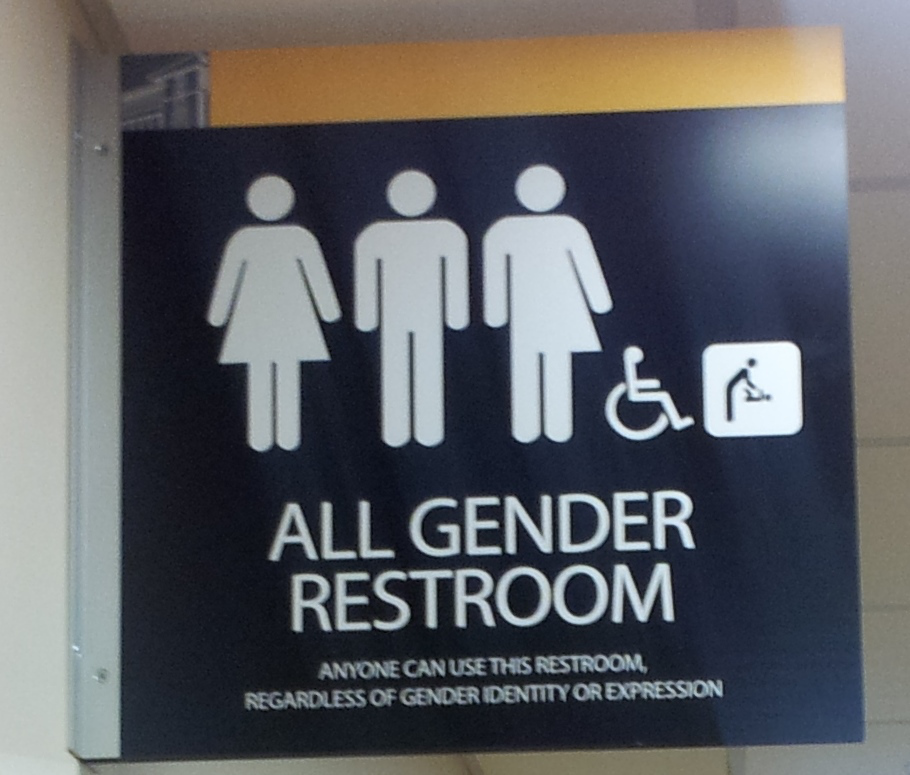
WHKP's NEWS DESK talked to a HHS official this week and ask the question, "Will the remodeled Hendersonville High School have gender neutral bathroom after reading reports that the newly 'remodeled' Chapel Hill High School has installed gender neutral bathrooms.
The answer was no. The HHS official said there would not be gender neutral bathrooms in the high school that is currently being "remodeled" on 8th Avenue in Downtown Hendersonville.
Chapel Hill High School, in Chapel Hill, NC, also the site of the University of North Carolina's "flagship University", has some 1,600 students, compared to some 800 students at Hendersonville High School, which is the least populated of all four high schools in Henderson County. West High has the most with 1,100 students, North 1,000 and East 900.
Henderson County has a total public school population of around 13,000 students with a total of 23 schools.
Minority enrollment is 35% of the student body, with the majority being Hispanic. The North Carolina public school average of minority students is 52%, which is black.
WHKP researched the internet for a simple definition of Gender Neutral bathrooms and settled on the following article:
A quick explanation about use of the term 'All-Gender' rather than 'Gender-Neutral". The current trend in higher education is moving away from “gender-neutral” to using “all gender”, “gender inclusive”, or simply “inclusive” or “restroom” to label restrooms. Though there are no specific studies regarding the name of these restrooms, “gender inclusive” is preferred as it indicates that the campus community recognizes that genders exist outside of the binary model (i.e. the idea that humans are only “male” or “female”), and anyone, no matter what their gender, may use the restroom. Further, “inclusive restroom” can indicate that the restroom is open to all people and all identities. This includes people of various (or no) genders, people with disabilities, families, etc.
All-gender restrooms are commonly thought of as needed just for people who identify as transgender, but access is also an issue for individuals who are intersex, individuals with disabilities and their caregivers, and families (parents bringing children of the opposite gender into a restroom). Increasing availability of single-stall restrooms also meets the accessibility regulations of the Americans with Disability Act (ADA).
